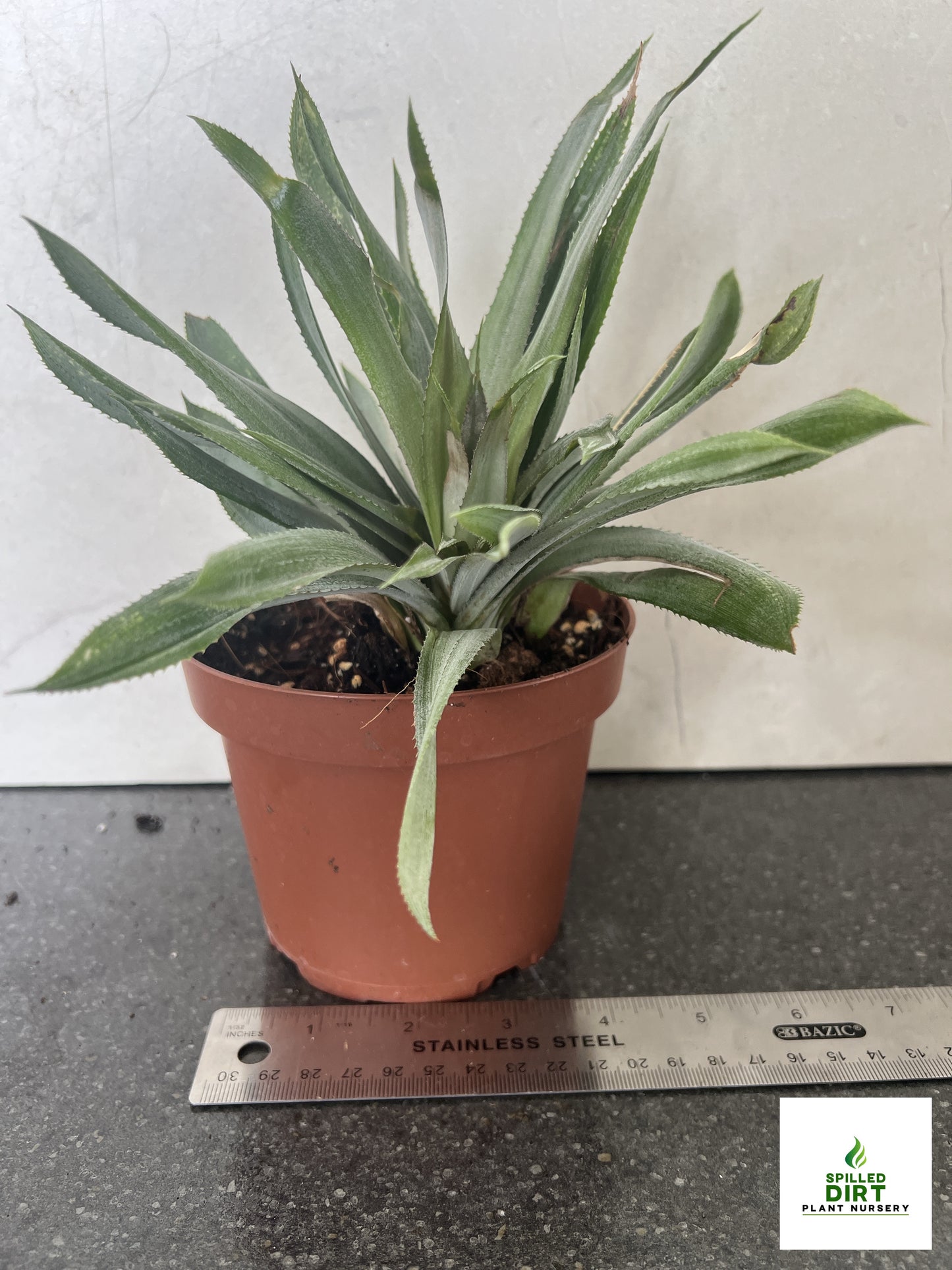

Bighead pineapple
Bighead pineapple
Couldn't load pickup availability
Botanical Name: Ananas comosus 'Capezona'Native Region/Environment: Bighead pineapple is an heirloom species. It was once an abundant pineapple species in the Caribbean, particularly Puerto Rico. Cultivation in Puerto Rico is documented pre-Columbus but this species was displaced beginning in the late 19th century with commercial cultivars from Hawaii. Unlike the uniform size and shape of commercially available pinapples, the Bighead species is known for its immense size, wonky roundish shapes, abundant fruit meat and an uncharacteristically sweet juice bordering on nectar. Delicious!! "Cabezona" is a species found in Mexico and some speculate it may be the same species. Sun/Light: Full-part sun Temperature: Indoors will require minimum 50F temperatures. Outdoors: USDA Hardiness zone 10-12 Water: Drought tolerant once establish, prefers moist, but not soggy soils. Over watering and over fertilizing are the easiest ways to kill a coveted pineapple plant. so feed quarterly and water as needed to prevent water logged soils. Use a chunky soil mix to help prevent over watering and root rot. Soil: Nutrient rich, fast draining, porous soil. Err to the side of underwatering. Growth Pattern: As with most other bromeliads, a pineapple plant grows from a central, low axis, with stiff leaves that have sharp spines or hooks. Mature Size: plants are 4'-5' width and height and the pineapple fruit can be close to the size of a basketball, weighing easily 10-15 pounds with a few rarities reaching 20-25 pounds. Attributes: A pineapple is a multiple fruit in one-it is the joining of potentially hundreds of pollinated flowers to become a single fruit. It is a very sweet and extremely juicy variety, easily identified by its characteristic large roundish shape. A fully mature Bighead pineapple can be almost twice the size of a store bought pineapple with unparralled quality of flavor. Attractor: In the wild, hummingbirds are the primary pollinators, but bees and bats can also be attracted to the flowers. Pot: 5" |
A rare find in the pineapple world of the bromeliad family. Pina Cabezona, called Bighead, was once a dominant species on the island of Puerto Rico and around the Caribbean, but now it is hard to find.
Pineapple plants can feed some, directly from their leaves, as with most bromeliads, as well as with their roots.